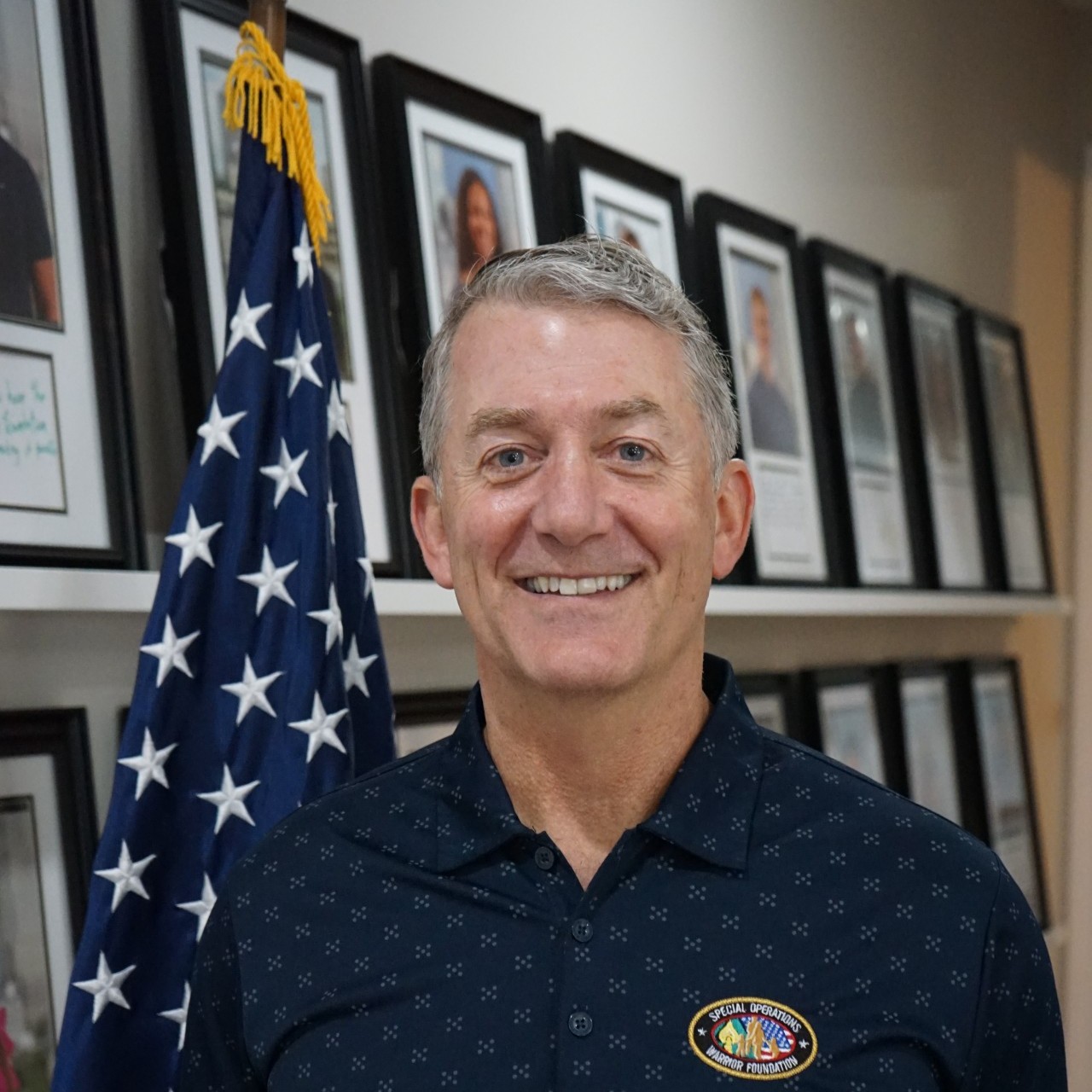
By Rear Admiral Jamie Sands, USN (Ret)
SOWF President & CEO
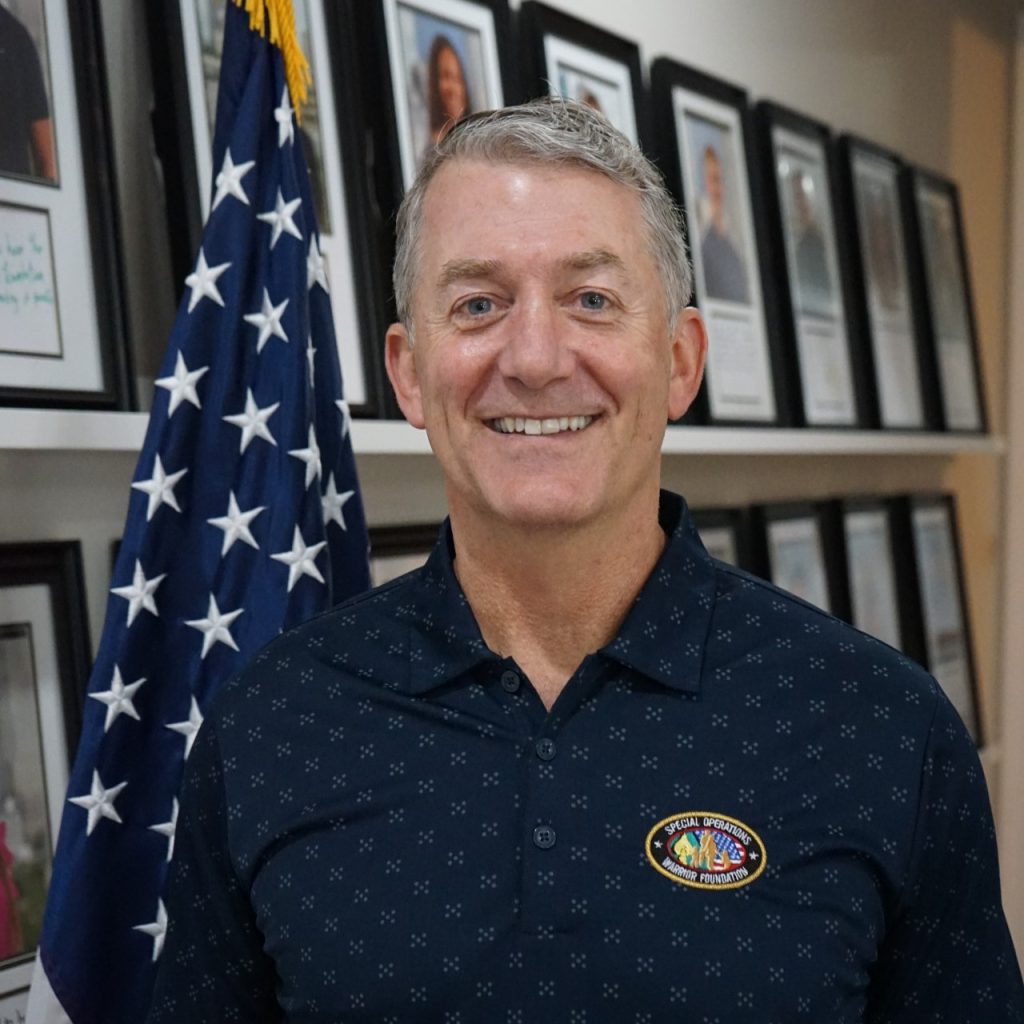
My leadership story began 34 years ago as a midshipman at the United States Naval Academy. From beginning to end, my journey was enabled by extraordinary family, friends, teammates and leaders. As I reflect on the path, I remain profoundly grateful to those who gave their last full measure – and to the families they left behind.
Upon graduation from the Naval Academy, I began my service as a surface warfare officer. During my entire journey, I served with remarkable leaders who took me under their wing to ensure my development.
As much as I enjoyed my time in the surface Navy, I was inspired by the challenges and adventures of the SEAL teams. 3 years into my career, I transferred to Naval Special Warfare and completed the SEAL training pipeline.
I have had dozens of formative experiences from midshipman to Rear Admiral, but there are a few that stand out. My first tour in the SEAL teams at a SEAL Delivery Vehicle (SDV) team. We dove mini-submersibles long distances under the cover of darkness and frequently operated from submarine host platforms. During an exercise off the coast of Korea, my dive buddy and I locked out of a submarine at night and began a long journey to conduct a training ship attack in Pusan harbor.
Regrettably, we did not adjust our SDV compass for the area. As we dove toward the harbor, we found ourselves constantly off track and caught in the plethora of squid and fishing nets outside the Korean channels. Six hours into a dive that was supposed to last eight hours, we finally reached the harbor. We were frustrated, tired and confused as to why we were struggling with navigation.
We surfaced the SDV to check in with a dive safety boat and I looked across at my dive buddy, a junior SEAL with a few more years of experience than me. The original plan was to move to our bubbleless dive rigs, place a fake bomb under a ship in the harbor, and head out to sea to rendezvous with the submarine. It was my first large exercise training mission in the SEAL teams and I struggled between my common sense and my ego.
Unsure of the right thing to do, I turned to my dive buddy and asked, “what do you think?”
He looked at me across the boat and slowly shook his head “no.” We both had the same concern, we were lost the entire time, and we still had to go find a submarine underwater, at sea, at night. We were pretty sure we would live through the evening, but we were not confident we wouldn’t have the SDV run out of ballast air and sink away somewhere off the Korean coast. I let the safety boat know our decision, and we dove the SDV back out to sea. Seven hours later, we located and recovered to the submarine.
The entire way back to the submarine we continued to cut ourselves out of fishing nets underwater and our anxiety grew. I thought about how short my SEAL career would be, because I would surely be kicked out for failing my first training mission. We decompressed in the chamber and climbed the ladder down into the submarine, where my commander was waiting. Rather than fire me, he grabbed my hand, looked me in the eye, and told me it took a lot of courage to make the call to head back to the sub. He wasn’t disappointed, he was proud of us.
That long night shaped my leadership over the next 30 years. First, it drove home the fact that you are never truly alone as a leader when you are willing to ask your teammates for help. Second, my commander showed me how to respond when my people failed. And finally, it highlighted for me that the most valued characteristic in our warrior culture was moral courage. Take care of your people, push them and allow them to fail, and do the right thing – especially when it’s hard. We typically know what’s right, the hard part is doing it.
As the President and CEO of SOWF, I continue to serve with remarkable people focused on a mission greater than ourselves. Over 30 years in the SEAL teams I served as a Platoon Commander, Troop Commander, Executive Officer, SEAL Team Commander, Group Commander and Commander of the entire Naval Special Warfare force. The decades were the best and worst of times, and I saw teammates and our families experience death and physical and mental injury. As I reflect on my experience, one word captures my emotion: gratitude. Gratitude for those who served; and gratitude for the families who served along with them.
My leadership journey is now focused on those families. I feel not just fortunate, but downright lucky, to lead the men and women of SOWF. I’ve been blessed with the opportunity to remain authentic, aligned with my values, and in service of our Special Operations force. As SOWF President and CEO, I will advance our mission, lead and support our staff, and increase our endowment to advantage our students and families for success.